



top of page
Circana Navigation
Left Sidebar.jpg

Resources

Demand Signals Report

CPG Demand Signals Report

Monitoring the impact of macroeconomic factors, including tariffs, on volume, price, and supply on U.S. consumer behavior within the CPG Industry. 

New strategies and tactics.

Circana's official announcements.

Circana in the press.

Industry rankings vs. previous data period.

See how Circana can help your business grow.

Perspectives from our thought leaders.

A curriculum to address your needs.

Solving challenges that matter to you.

Thought leaders giving growth insights.

Consumer insights and buying trends.

Purple-gradient.jpg

Pokémon was the

#1

toy property in 2025 for 9 of the 12 countries we track.

Quick Insight

Pokémon continues to drive cross-category growth. ⚡


In 2024, Pokémon Scarlet and Violet led the franchise in dollar sales. In 2025, Pokémon ranked as the #1 toy property in 9 of the 12 countries we track. 🌎

Company

Solutions

Not sure where to start?

Uncover the right solution for your business in a few clicks.

Our Liquid Data® technology provides cross-industry data and advanced analytics in a single, open platform.

SOLUTIONS

Answer the most pressing business questions.

Designed for small CPG businesses. 

Curated reports and guided analysis.

Data and analytics for a single source of truth. 

Liquid-Data-Go-Hero.jpg

Liquid Data Go®

Grow Faster.

Dream Bigger.

Liquid Data Go® helps growing CPG brands show their value with insights into performance, consumer behavior, e‑commerce trends, and pricing across key retailers.

Suggested solutions

Liquid Data Go® helps small to midsize CPG brands grow faster and dream bigger.

Understand complex consumer behavior with clear, accurate insights into omnichan…

Circana's Liquid Data Collaborate™ solution helps you bring all your data togeth…

Not sure where to start?

Uncover the right solution for your business in a few clicks.

Right Sidebar.jpg

Beyond the Buzz: How Brands Should Really Think About Major Event Marketing

By

Marshal Cohen

Marshal Cohen

May 27, 2026

Posted in:

Category

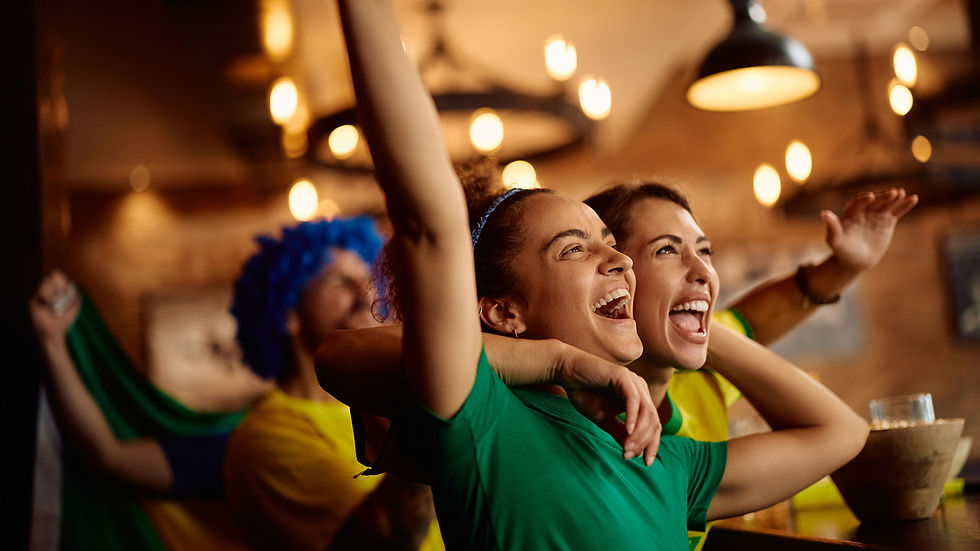
Whether it is the Olympics, global soccer tournaments, tennis grand slams, prestigious golf tournaments, or a championship American football game, major sporting events capture the world’s attention, and with it, a surge in consumer spending. For marketers, these moments can feel like can’t-miss opportunities. But the reality is more nuanced: While the impact on retail and consumer engagement is real, it is often fleeting, uneven and highly contextual.

Solution-area_edited.jpg

Est. Read Time:

3

mins

You're reading:

Beyond the Buzz: How Brands Should Really Think About Major Event Marketing

Like it? Share it!

In This Article

Link
Link
Link
  • Writer: Marshal Cohen
    Marshal Cohen
  • 2 minutes ago
  • 3 min read

The question isn’t just whether brands should participate — it’s also about how to do so strategically.


The “Blip” Effect: Short-Term Gains, Narrow Windows


Major events undeniably drive spikes in spending, but these are often concentrated within a short time frame and within specific categories — the broader retail impact tends to be modest. Brands that align well with consumer behavior during these moments can benefit, but the effect is rarely universal. Even at its peak, the bump is typically short-lived — though it can reach as much as a 10% lift in key categories that are closely tied to the event experience. This is why many brands experience what can best be described as a “blip” — a temporary surge rather than a sustained growth curve. Without a clear plan to capture and extend that momentum, the returns may fade as quickly as they arrive.


The Power of Infrequency: Fever Pitch Moments


Events like the World Cup and the Olympics share a defining characteristic: They happen infrequently, often every four years. That scarcity creates something powerful — an intense, almost “fever pitch” level of consumer engagement. During these periods, consumers aren’t just watching — they’re actively seeking ways to participate. Entertainment and patriotism play a major role, as audiences rally behind national teams and look for ways to express that enthusiasm, whether through viewing experiences, gatherings, or purchases. This heightened emotional state can amplify the impact of well-executed marketing. But it also compresses the timeline. Brands have a narrow window to capitalize on this spike in attention and sentiment before it dissipates.


Duration and Frequency Matter


While infrequent global events create intense spikes, duration and recurrence still shape overall opportunity. Longer-running events provide more time for brands to build engagement, refine messaging and optimize performance. Meanwhile, more frequent events — such as seasonal tournaments or annual competitions — offer a steadier rhythm for brands to build consistency and learn over time. The key distinction: Infrequent events create intensity; frequent ones create familiarity. Each requires a different strategic approach.


Fit Matters More Than Presence


Not every category benefits equally. Brands that align naturally with how consumers engage—whether directly through merchandise or indirectly through experiences like viewing, socializing, or travel—stand the best chance of success. Importantly, these events amplify existing demand. Categories and products already trending with consumers are more likely to win than those trying to create new relevance.


The Cost of Entry — and the Crowd


Major events come with significant costs. Licensing fees, sponsorship agreements, media investments, and activation strategies can quickly add up and, in some cases, offset the potential upside. Exclusive rights can offer a meaningful advantage, helping brands stand out and secure stronger attribution. But these opportunities are limited — and expensive. For brands without exclusivity, the competitive landscape becomes much more challenging. This isn’t the era of simply putting a logo on a T-shirt and expecting results. Success now requires differentiation, and thoughtful integration across distribution, content, and social engagement strategies.


Visibility vs. Meaningful Engagement


There’s no question that these events deliver massive audiences. But reach alone is not the goal — impact is. Brands must assess how many consumers will truly engage with their message, and whether that engagement drives measurable outcomes. Is this an opportunity to introduce your brand to new audiences in a meaningful way? Or just a momentary spike in impressions?


Equally important is what happens next. Can the relationship extend beyond the event? Success lies in treating these moments as entry points into longer-term engagement — not one-off campaigns.


A Strategic Tool, Not a Silver Bullet


At its core, aligning with major events should be evaluated like any other marketing investment: by weighing cost against opportunity. These moments can absolutely be powerful — but they are just one tool in a broader marketing toolbox. The decision to participate should be guided by the specific objective, whether that’s driving short-term sales, building brand awareness, or strengthening emotional resonance. The key question remains: What is the job this investment needs to do—and is this the best way to do it?


The Bottom Line


The allure of global events is undeniable. The audience, the energy, the cultural relevance — they all create compelling opportunities for brands. But marketers must recognize both the upside and the limitations. The way to do this is by understanding how these global fan moments translate into actual consumer activity and measurable shifts at retail.


Major events create moments — but not miracles. Success belongs to brands that understand the dynamics of what audiences watch, how they engage and what they buy, and then choose their role carefully and execute with precision in order to turn a fleeting moment into lasting value.

Subscribe to the latest content from Circana

Add a Title

About the author

Marshal Cohen is a nationally known expert on consumer behavior and the retail industry. He has followed retail trends for more than 30 years at Circana (formerly The NPD Group) and as the head of leading fashion and apparel manufacturers and major retailers.


As part of his work at Circana, Marshal leads many top firms in long-range and strategic planning sessions. He often utilizes motivational presentations to help launch corporate goals and kick-off meetings. Marshal is the author of two books, “Why Customers Do What They Do” (2006) and “Buy Me! How to Get Customers to Choose Your Products and Ignore the Rest” (2010).


In addition to his duties at Circana, Marshal is a member of several boards of directors and was appointed to the Cotton Board and American Apparel and Footwear Association (AAFA). He is also a guest professor at North Carolina State University’s Wilson College of Textiles, where he introduces students and faculty to techniques for analyzing and applying data. Marshal has been a guest lecturer at the Wharton School of Business, the Fashion Institute of Technology, and Savannah College of Art and Design. He has also twice been named to the Footwear News Power 100 list.


Marshal is a regular contributor to many major media outlets. He is frequently quoted in publications like The Wall Street Journal, The New York Times, and Women’s Wear Daily. Additionally, he appears on various television news programs, including “Today,” “Good Morning America,” and “CBS Sunday Morning,” and he has been a regular guest on Bloomberg TV and Radio. He is also a sought-after speaker at key industry events such as MAGIC, The Fairchild CEO Summits, The National Retail Federation’s (NRF) Annual Convention, and The American Apparel and Footwear Association’s (AAFA) Annual Executive Summit. Marshal was the only industry expert who appeared in the documentary, “God Save my Shoes,” produced by Caid Productions.


Marshal has held a variety of positions analyzing and interpreting Circana’s uniquely combined consumer and point-of-sale tracking services for the apparel, footwear, accessories, and sports industries. His career began in the training program at Bloomingdale’s, where he worked his way up to merchandise manager. From there, he became president of WilliWear and subsequently president of Stanley Blacker. He was also founder, owner, and president of Motive Marketing Group.


To reach Marshal Cohen for commentary, please email janine.marshall@circana.com.


View all solutions that

bottom of page