

















Whether marketing mix modeling (MMM) arrives as software or as a service, teams judge it the same way: can they trust the answer fast enough to use it where the decision is made?
Today's questions are too varied for one engagement format. Some need a quick look, such as checking channel performance against plan or simulating how different scenarios might play out. Others need more than a number: committing a budget reallocation, building organizational buy-in, or defending results to finance and leadership, including results cited on an earnings call. Those decisions benefit from expert consultation, so the answer is trusted, understood, and acted on.

The Problem With a One-or-the-Other Marketing Mix Modeling Mindset
Self-service tools are generally positioned on swiftness and autonomy, while expert-led services are set on rigor and interpretive depth. Both offer real advantages. Issues arise when these benefits are treated as mutually exclusive, as if choosing a faster path means accepting less defensible results, while choosing expert support results in waiting too long for answers.
What actually determines quality is not the delivery format, but the consistency of data and the modeling standards underneath it. A platform that produces instant outputs based on modeled or incomplete sales data can generate numbers faster than they can be trusted. An expert team working from the same weak foundation will then deliver the same unreliable results, more slowly.
On the other hand, when both paths draw from the same measurement standards, the same retailer-sourced data, and the same benchmarking infrastructure, switching between them can be done with confidence.
What Does a Self-Directed Marketing Mix Modeling Platform Make Possible?
A well-constructed self-service environment goes beyond putting a model in front of an internal team. It reduces the friction between data and decisions at the pace that planning demands.
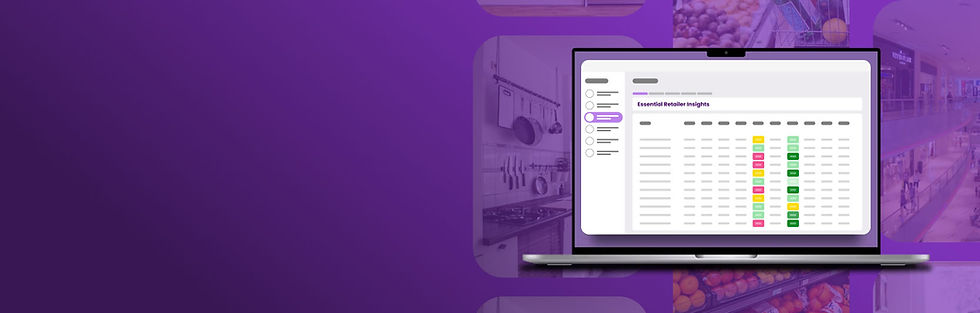
Circana’s Liquid Mix™ platform is designed around that goal. Teams can onboard and connect data through guided mapping workflows and AI-assisted preparation tools that reduce manual configuration. Models can be updated as new inputs arrive, so results stay current without requiring a new project to start. Scenario and optimization tools allow teams to pressure-test allocation decisions before committing, assessing what happens to expected return if spend shifts across channels, geographies, or time periods.
This analytical capability is not simplified for accessibility. Store-level point-of-sale (POS) data and category-level benchmarks are built into the modeling environment, so internal teams are working with the same measurement inputs that underpin expert-led engagements.
This model works well for organizations with established analytics functions, frequent planning cycles, and questions that recur regularly enough to benefit from an always-on measurement environment.
Where Expert Involvement Makes the Difference in MMM
Not every measurement question is suited to self-directed analysis. Some involve enough complexity, organizational stakes, or interpretive ambiguity that can best be addressed with the help of experienced analysts.
Circana’s expert-led services are structured around distinct contributions. Measurement scientists take responsibility for model construction, calibration, and validation. Industry consultants apply category and retail expertise to place findings in relevant commercial context — distinguishing between a promotion that overperformed because of media support and one that overperformed because a competitor went out of stock. Business translators convert analytical output into clear, actionable direction, driving adoption across marketing, sales, and finance.
This combination is particularly valuable for high-stakes decisions, like a major portfolio reallocation or assessment of trade and media investment across multiple categories. It is also valuable for organizations that are still building in-house measurement capability and want experienced guidance as they create and scale.
The Shared Foundation That Makes Both Work
Whether a team is running models on a self-service basis or working with Circana analysts for a particular project, the underlying measurement framework stays the same. That consistency makes switching between modes practical and the most beneficial.
Circana’s market measurement begins with retailer-direct, census-level POS data covering approximately 92% of the U.S. MULO+ universe that spans more than $1.1 trillion in CPG sales across food, drug, mass, club, dollar, convenience, pet, beauty, and online-only channels. It reflects transactions reported directly by more than 2,100 retail partners across 110,000+ stores and 7,000+ geographies.
Layered into the modeling environment is the Compass benchmark database that includes more than 10,000 marketing-response and ROI/ROAS benchmarks drawn from prior engagements across categories and channels. These benchmarks inform model priors, stabilize estimates in areas where a brand’s own history is limited, and are available to self-directed and expert-led users alike.
Consumer context comes from two additional assets: a receipt panel of 250,000 households, calibrated to observed POS data, and loyalty data covering 70 million unique households and more than 30 million shopping trips per week. These assets connect individual purchase behavior back to the market conditions such as pricing, promotion, and distribution that are present at the time of each transaction. When both delivery models share this foundation, the outputs they produce are comparable, and the organization’s understanding of performance remains coherent across engagements.
Choosing the Right Marketing Mix for the Right Moment
For most organizations, self-service and expert-led approaches are not a single permanent solution. Companies must determine allocations between the two approaches based on what they are trying to understand at the moment.
A few factors shape their decisions. For example, the cadence of planning matters, because teams that need results weekly or monthly will use a self-directed environment differently than those running annual or semi-annual planning cycles. The complexity of the question is important, too, because decisions that involve media, trade, pricing, and distribution simultaneously typically require more interpretive support than a single-channel budget review. In addition, the audience for the output matters, because the case for expert validation is stronger when findings need to hold up under scrutiny from finance or executive leadership. The organization’s internal capability is a consideration as well, given the fact that how much independent work a team can do well varies.
For many organizations, the answer is not a regular or set choice between models. It is a working mix of both, shifting as circumstances shift — as they regularly do.
Yeimy Garcia Smith is SVP, Global Measurement at Circana.