Industries



25-34-year-olds are
21%
more likely to drink pumpkin coffees than the average consumer
Quick Insight
It's that time of year again... pumpkin spice is back. 🎃☕
According to Circana, 25–34-year-olds are the most likely to enjoy pumpkin-flavored coffee, proving the season's signature sip is going strong.
Are you team “too early” or “right on time”?
Company

Solutions

Track business performance against key competitors at every stage of the product lifecycle.
SOLUTIONS
We help our clients accelerate demand by focusing on the best opportunities for the greatest impact on their business.
SOLUTIONS
Our Liquid Data® technology provides cross-industry data and advanced analytics in a single, open platform.
SOLUTIONS
Resources










Suggested solutions



How to Leverage Retailer Collaboration Programs to Drive Joint Business Plans
The term “collaborate” is often used in discussions between suppliers and retailers. Taken to the next level, formalized retailer collaboration initiatives can lead to win-win-win opportunities for brands, sellers, and consumers.


Retailer-manufacturer collaboration (RMC) programs are strategic initiatives in which brands and retailers work together to align operations, share information, and improve efficiencies across their respective operations. For scaling brands with fewer resources and big ambitions, these kinds of partnerships provide a structured, data-driven way to plan, measure, and grow alongside their retailer partners.
As small and medium-sized businesses (SMBs) work to get into even more doors, RMC collaboration programs build a case for expansion, too. Today, this has become one of the most direct paths to success for smaller suppliers.

What Makes Retailer Collaboration Programs Different
Traditional retail partnerships often rely on generic syndicated data or fragmented reporting. Both sides look at performance, but rarely through the same lens. That gap can lead to friction, slow decision-making, and weaken the supplier's position at the table.
RMC programs close that gap in important ways:
They speak the retailer's language. Such programs use the retailer's own defined hierarchy, including their exact category and subcategory structures. When you meet with a buyer, you are working from the same definitions, the same tracking, and the same view of the business they see internally. This shared foundation removes ambiguity and swiftly builds credibility.
They standardize joint planning. Each program includes a library of joint planning templates, reports, and KPIs designed in partnership with the retailer's merchant teams. Suppliers arrive with the same scorecarding the retailer already trusts. Everyone measures success against the same metrics, which makes conversations sharper and more productive.
They go deep. Many retailer collaboration programs extend far beyond point-of-sale (POS) data. Depending on the retailer, suppliers gain store-level analysis, supply chain insights, and loyalty card data. This is granular, personalized access to a single retail partner — the kind of visibility most SMBs could never assemble on their own.
The result is a partnership built on shared information rather than assumptions. That model is especially pivotal for emerging brands, because every early decision carries weight.
The Power of Data-Driven Insights in Joint Business Plans
Even before a retailer meeting begins, emerging brands can lay some important groundwork. Buyers respond to suppliers who arrive prepared with clear evidence rather than opinion. Showing up with data signals that a brand partner understands the category, shopper, and the retailer's priorities.
Insights strengthen joint business plans in three practical areas:
Assortment: You can uncover which products perform and underperform and determine gaps within the retailer's category definitions. This can help you with scale, recommending the right mix rather than defending the full line.
Pricing: You can support price recommendations with performance evidence rather than guesswork, positioning you as a thoughtful collaborator focused on shared results.
Promotions: With the backing of data, you can show which promotional strategies drive volume and repeat purchases and align with the retailer's goals.
Identifying High-Potential Opportunities
Not every store or region delivers the same value. One of the most useful applications of collaboration data is pinpointing where a brand and its products perform best and where they have room to grow.
Store-level and regional analysis lets SMBs see performance with precision. They can identify high-performing outlets, understand the regional patterns behind them, and prioritize distribution where the opportunity is greatest. This focus really matters in today’s marketplace, where the retail landscape can quickly shift because of mergers, acquisitions, or expansion.
Shopper and store activation strategies add another layer. By understanding how shoppers behave in specific locations, an SMB can tailor merchandising and activation to the stores most likely to respond. Rather than spreading resources thin, scaling businesses concentrate effort where it produces measurable returns for them and their respective retailers.
For example, for a brand launching in a single banner across several hundred stores, collaboration data might reveal that a defined cluster of locations drives the majority of the velocity. By focusing merchandising support and promotional dollars on that cluster, the SMB improves sales rate and repeat rate, then uses that proven performance as the case for wider distribution.
That proof of concept is the real prize. After all, managing your first distribution closely creates the story you carry to the next retailer. Strong early KPIs, particularly a healthy sales rate and repeat rate, become the evidence that convinces additional partners to expand your presence.
Leveraging Consumer Behavior Analysis for Competitive Advantage
Retailers are always guided by their customers. Suppliers who understand consumer behavior earn a meaningful edge in every conversation.
Consumer behavior analysis reveals who is buying your product, how often they return, and what drives their decisions. This intelligence helps SMBs refine joint business plans around real demand rather than internal assumptions. When you can explain why a product resonates with a retailer's specific shopper base, you strengthen both your position and the plan itself.
Loyalty card insights, available through many collaboration programs, deepen this understanding. This kind of data shows purchase frequency, basket composition, and repeat behavior at a level of detail that transforms planning. Instead of reacting to last quarter's results, brands can anticipate what shoppers want next and bring proactive recommendations to retail partners.
Pricing Strategies for Collaboration Success
In addition to consumer behavior insights, data on pricing helps level the playing field for SMBs. If they set prices too high, volume can suffer. If they set prices too low, margins decline. Collaboration programs help brands find the balance.
Pricing analytics and elasticity models show how demand responds to price changes within a specific retailer's environment. These tools help smaller brands validate the price and trade plans that actually work for them. The program bolsters the pricing strategy, confirming what resonates before making a commitment across more stores.
A few principles guide effective pricing in collaboration:
Anchor decisions in evidence: Use elasticity data to test scenarios rather than defaulting to across-the-board discounts.
Protect margin while staying competitive: Identify the price points that sustain volume without eroding profitability.
Align on shared outcomes: Frame pricing as a plan that benefits both your brand and the retailer, reinforcing the partnership.
When pricing decisions are grounded in retailer-specific data, both sides win. That balance is central to solid retail partnerships and is one of the more practical retail negotiation approaches that an emerging brand can take.
How Circana Solutions Enable Successful Retailer Collaboration
Most SMBs face similar challenges. They lack the time, staff, and analytics resources to turn complex data into a clear plan. Circana offers solutions specifically designed to help growing brands overcome those barriers and collaborate more effectively with their retail partners.
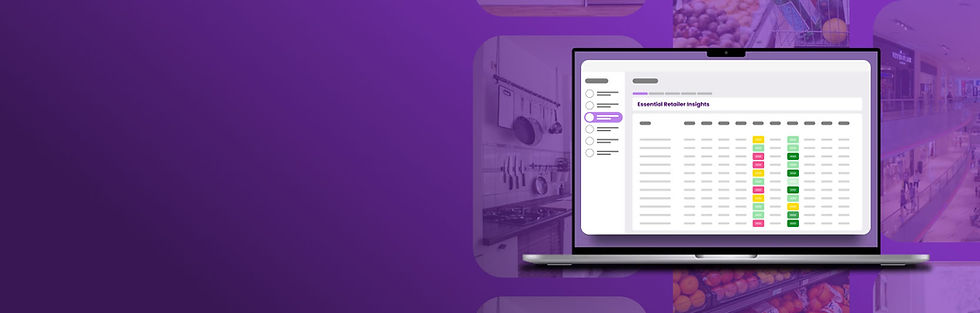
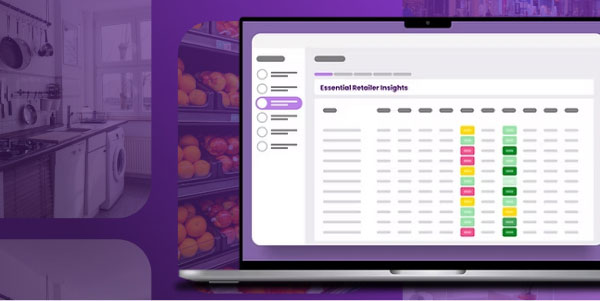
Circana’s Liquid Data Essentials provides the simplest path to retailer-ready insights. Built around a single retailer’s view of the business, it delivers pre-built reporting, guided insights and presentation-ready outputs aligned to how individual retailers measure performance. The program is available for key retail partners including H-E-B, Albertsons, Ahold Delhaize, Kroger, and Wegmans.
For brands looking for a broader view of the market, Liquid Data Go® combines market, retailer, and consumer analytics in one platform. Users benefit from an AI-powered, 360° view of the category, competition and buyers to guide their strategic decisions.
Today, retailer collaboration is no longer reserved for the largest suppliers. With the right data and tools, emerging brands can compete, prepare, and grow with their most important partners.
Subscribe to our Newsletter
Sign-up to get similar content delivered straight to your inbox.
Like it? Share it!