Industries



25-34-year-olds are
21%
more likely to drink pumpkin coffees than the average consumer
Quick Insight
It's that time of year again... pumpkin spice is back. 🎃☕
According to Circana, 25–34-year-olds are the most likely to enjoy pumpkin-flavored coffee, proving the season's signature sip is going strong.
Are you team “too early” or “right on time”?
Company

Solutions

Track business performance against key competitors at every stage of the product lifecycle.
SOLUTIONS
We help our clients accelerate demand by focusing on the best opportunities for the greatest impact on their business.
SOLUTIONS
Our Liquid Data® technology provides cross-industry data and advanced analytics in a single, open platform.
SOLUTIONS
Resources










Suggested solutions



Using Survey Data to Navigate Shifting Consumer Preferences During Economic Uncertainty
As macroeconomic headwinds stubbornly stick around, consumers continue to move between channels, products, and brands. Whether switching to private label products, holding out for promotions, or splitting visits across more stores, today’s shoppers are tougher to track.


With audiences toggling faster, brands and retailers aren’t always getting the full view of their customers that they need to move their business forward. Although purchase data captures important shopper shifts, companies need to learn what drives behaviors to keep up with, and even ahead of, their audiences. Consumer surveys close gaps by going straight to the people making the buying decisions.

Why Consumer Behavior Is Harder to Predict Right Now
It’s no secret that economic pressures affect how people shop. Consumers who bought the same brand for years may abandon it within a single month, not because the brand failed, but because money is tight and a lower-cost alternative appeared on the shelf in front of them.
These shifts emerge faster than traditional research cycles can record. By the time a quarterly study is fielded, analyzed, and delivered, the behavior may have already moved.
At a time when consumer confidence remains fragile and shopping patterns are fragmented, a reliable way to understand current consumer motivation is to talk to current buyers about their current decisions. After all, what a consumer said six months ago may no longer hold true.
Where Survey Fits Alongside Panel and POS Data
While emerging brands can infer some motivation from panel data and see what’s happening at the shelf using point-of-sale data, they can pinpoint the reasons behind a purchase by communicating directly with verified buyers. Together, POS, panel, and survey data provide SMBs with powerful insights that help them secure or maintain a presence on the shelf and connect with consumers.
The strength of a well-designed survey is its ability to isolate people who have already behaved in a specific way and then ask them about it. For example, if a household stopped buying a product, the brand can reach that exact household and ask them questions about direct and indirect purchase barriers. These are not abstract opinions collected from a general audience. They come from verified buyers whose behavior can be confirmed.
Some survey formats work particularly well during periods of economic volatility. A focused survey with multiple-choice questions or rating scales can capture decision drivers such as price sensitivity and brand switching.
Survey questions are crucial in getting to impactful truths. Users can use the results to confirm what they already believe or reveal impactful movement.
Three types of questions consistently reveal how preferences shift under economic pressure:
Purchase driver questions: These expose trade-down and trade-up behavior. Ask what made consumers choose the current product over the one they bought before. Price, size, availability, and quality each point to a different strategic response.
Brand loyalty and switching questions: Switching intent is an early warning. Ask whether consumers still plan to purchase your brand, and why their preference may have weakened. The answers separate price-driven defections from deeper dissatisfaction.
Price sensitivity questions: These questions measure how dependent demand has become on deals. For example, how reliant is the household on promotions? Do they buy certain categories only when a discount is available?
Together, these three question types turn a vague sense that "something is shifting" into a specific, named cause that can be addressed and acted on in a timely way.
Survey Design Principles That Matter
A well-built survey produces decisions. On the other hand, a poorly designed survey introduces bias, inflates abandonment, and yields data that can’t be trusted.
Scaling brands can be mindful of a few principles to keep in mind when constructing a solid survey:
Write clear, neutral questions
Wording shapes responses. Leading or loaded phrasing pushes respondents toward an answer and corrupts the result. Keep each question specific, neutral, and focused on one idea. Avoid double-barreled questions that ask two things at once.
Reach a representative sample without an enterprise budget
Sample quality matters more than sample size. A smaller group that accurately reflects your buyers is more useful than a large group that does not. The advantage of verified-buyer sampling is reaching people whose behavior is confirmed.
Turning Survey Data Into Decisions
After collecting responses, brands can use them to inform actions on product, pricing, and messaging. Historically, this is where SMBs have fallen behind, because they lacked the analysts to process responses and the time to translate findings before conditions changed.
That barrier has been removed with the introduction of survey tools that summarize results automatically. In today’s market, a brand without a research team can still reach a clear conclusion.
When looking at results, SMBs can take important steps to truly benefit from the survey:
Read the overall sentiment: Start with the headline result for each question: what share of respondents answered which way.
Compare segments: Filter by age, region, or other important demographics. f you are trying to reach younger households, look specifically at how they responded to questions on price and value.
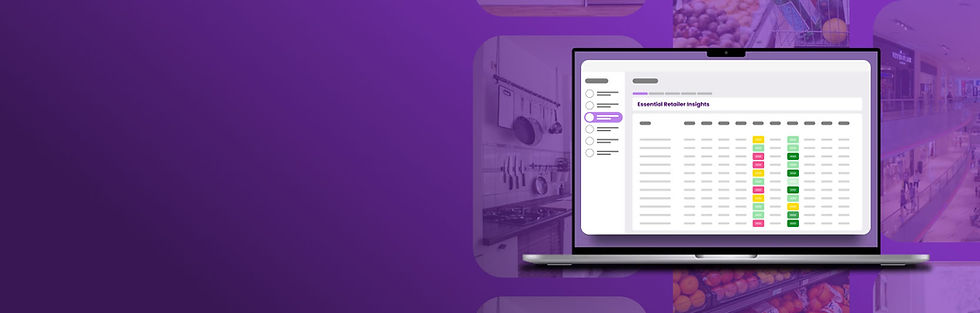
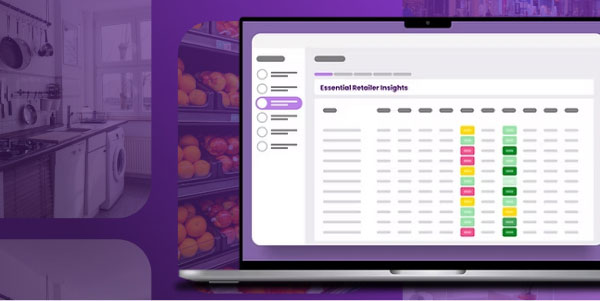
In Circana's Liquid Data Go® solution, templated reports handle much of this work directly. AI-enhanced summaries describe what each report shows and what it means, and built-in filtering lets a team filter responses by key demographics without analyst support. An SMB user can log in and see new responses from the prior day, then narrow them to a single age group on their own.
Translating Findings into Moves
The output should always be a decision. If price sensitivity rose among your core buyers, test a pack size or promotion. If availability is the barrier, the conversation moves to distribution. And because survey responses come from verified buyers, they become persuasive evidence to bring to a retailer: clear proof of what shoppers are asking for, which strengthens the case for a promotion, a price change, or better shelf placement.
Speed as a Competitive Advantage
In a volatile market, the time between question and answer is itself a competitive position. A brand that fields a survey this week and adjusts next week holds an advantage over a competitor still waiting on a study that lands next quarter.
This is where the historical disadvantage for smaller brands is reversed. Custom research was once out of reach because it was too expensive, too slow, and too dependent on specialist teams. That is no longer the case.
With survey capabilities integrated into Liquid Data Go, results arrive swiftly. In a short window of time, a brand can see answers flowing in and correct course based on what verified buyers are actually saying.
How Liquid Data Go Helps SMBs Turn Insight Into Growth
Liquid Data Go is a single, self-serve platform that was built for teams without a dedicated research function. It makes consumer and market intelligence accessible, current, and ready to act on, with no data expertise required.
For an SMB, that translates into practical advantages at a time when macro pressures are causing consumer preferences to shift quickly:
A clear view of performance and consumer behavior: Brands can track sales, share, and distribution across channels, then pair that behavioral picture with verified-buyer surveys that reveal what truly drives consumer choices.
Visibility into pricing and e-commerce trends: SMBs can see how they stack up across key retailers, monitor share shifts from cart to doorstep, and use elasticity models to set fact-based pricing that protects margin.
Fast, current data: With data ready within 24 hours and with 15% more market coverage, brands can spot trends gaining momentum and respond while they are still live.
Intuitive, ready-made reporting: Always-current best-practice reports turn complex data into clear stories in seconds, and they export directly into Word, Excel, and PowerPoint for retailer conversations.
Ready to move as fast as today’s shoppers? Request a free trial
Subscribe to our Newsletter
Sign-up to get similar content delivered straight to your inbox.
Like it? Share it!